
If you’ve ever wondered whether Bournemouth, the coastal gem in England, is part of the South East or South West, you’re not alone.
This is a question that has sparked debates among locals, visitors and geography buffs alike. Bournemouth is a unique place where vibrant culture meets scenic coastlines, but where does it truly sit on England’s map?
This blog explores Bournemouth’s geographical location, its identity in relation to neighbouring regions, and the historical context that helps define its place in the country. By the end, you’ll have a clear answer to this age-old debate.
Defining South East and South West England
What is the South East of England?
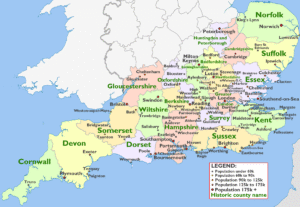 The South East of England includes counties such as Hampshire, Berkshire, Oxfordshire, Buckinghamshire, Surrey, Kent, East Sussex, and West Sussex. This region is known for its proximity to London, commuter towns, and the breath-taking beauty of areas like the South Downs and Kent’s coastline.
Key cities include Brighton, Oxford, Reading, and Canterbury. Economically and geographically, the South East is critical to England and is home to major transport links and affluent communities.
What is the South West of England?
South West England consists of Cornwall, Devon, Dorset, Wiltshire, Somerset, Gloucestershire, and Bristol. Known for its long coastline, rolling countryside, and rich cultural heritage, the South West has a distinct identity. This region is renowned for landmarks like Stonehenge, Dartmoor, and beaches in Cornwall, as well as its unique cuisine, including cream teas, cider, and Cornish pasties.
When we think of key places in the South West, cities like Bristol, Exeter, Plymouth, and Bath typically come to mind. Bournemouth, notably, is often listed as part of this region in both geographical and administrative contexts.
The Geographical Location of Bournemouth
Bournemouth is located on the southern coast of England, sitting in the county of Dorset. Geographically, it lies at approximately 50.72°N latitude and -1.88°W longitude, facing the English Channel. Using these coordinates, Bournemouth is clearly on the southern coastline, east of Devon and west of Hampshire.
If you take a closer look at regional maps, Bournemouth is nestled between two key areas that influence its geographical identity:
- To the west, it borders the broader South West region, including neighbouring towns like Poole and Weymouth, which are definitively categorised as South West.
- To the east, it’s close to Hampshire, a county considered part of the South East.
This dual positioning can contribute to the confusion about where Bournemouth belongs.
Bournemouth in Relation to Neighbouring Regions
To understand Bournemouth’s regional identity, comparing it to nearby regions is key:
- Hampshire (South East): Hampshire is to Bournemouth’s immediate east. Cities like Southampton and Portsmouth, both in Hampshire, are distinctly part of the South East. Though Bournemouth is close to these areas, the River Avon acts as a soft boundary where the South East transitions into the South West.
- Poole (South West): To Bournemouth’s west lies Poole, another town in Dorset. Historically, culturally, and administratively, Poole and Bournemouth have been grouped together as part of Dorset, which firmly places them in the South West.
- New Forest National Park (South East): North-east of Bournemouth, the New Forest area is a key feature of Hampshire, and is a significant distance from Devon and Cornwall, the heartlands of South West England.
Historical and Cultural Context
Beyond maps and coordinates, Bournemouth’s identity is heavily tied to Dorset, making a strong case for its inclusion in the South West. Historically, Bournemouth developed much later than other towns in Dorset, expanding in the 19th century as a seaside resort. Its location within Dorset solidified both its administrative ties and cultural associations with the South West region.
However, its proximity to Hampshire and its accessibility from London complicates perceptions. Bournemouth’s transport links, such as the South West Main Line railway connecting it to London Waterloo, contribute to its appeal as a getaway for residents of the South East.
Economically, Bournemouth has connections to both regions. For instance:
- Its booming tourism trade is linked with the South West’s reputation as a holiday destination.
- Its growing tech and finance businesses, and organisations like Tata Consultancy Services, reflect influences from the South East’s economic hubs.
The Verdict: Is Bournemouth South East or South West?
When it comes to defining Bournemouth, the answer lies in geography, governance, and cultural association. While Bournemouth could be loosely considered a geographic bridge between the South East and South West of England, it is firmly part of the South West according to official definitions.
The UK government and regional bodies include Bournemouth as part of Dorset, which is classified as a South West county. Its cultural and historical ties to Dorset further reinforce this identity.
Bournemouth Belongs to the South West
Whether you’re planning a trip or just satisfying your curiosity, knowing Bournemouth’s regional identity provides deeper insight into its unique character. Ultimately, while it may neighbour the South East, Bournemouth has its heart and soul firmly rooted in the South West of England.
If you’re visiting Bournemouth, you’ll experience a slice of the South West’s charm while standing at the doorstep of the South East’s practicality. Isn’t that the best of both worlds?