
Bournemouth is a vibrant coastal town in the South West of England, renowned for its stunning beaches, Victorian architecture, and bustling cultural scene.
But its county affiliation has sparked confusion for years. Is Bournemouth in Hampshire or Dorset? The answer might surprise you. Join us as we explore Bournemouth’s intriguing history, its shift from Hampshire to Dorset, and its current status today.
Bournemouth’s Historical Roots in Hampshire
To understand the historical confusion surrounding Bournemouth’s county affiliation, we need to roll back the years. Originally, Bournemouth was part of Hampshire.
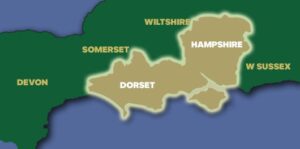
Its development as a town began around 1810 when Lewis Tregonwell, a Dorset squire, built a summer residence in the area. For decades, it remained a relatively small settlement tucked within Hampshire’s borders.
The arrival of the railway in 1870 ignited Bournemouth’s growth, transforming it from a quiet seaside spot to a significant town. By the late 19th and early 20th centuries, Bournemouth was a thriving resort town within Hampshire, with its popularity spreading among residents and tourists alike.
The Shift to Dorset in 1974
The county affiliation of Bournemouth changed significantly due to the Local Government Act of 1972, which came into effect in 1974. This act was designed to reorganise administrative boundaries across England and Wales.
Bournemouth was transferred from Hampshire to Dorset, a decision primarily based on geographical and administrative logic. The town was considered part of the South East Dorset conurbation, a densely populated urban area that also included Poole and Christchurch. Aligning all of these towns into a single county made administrative sense. And so, from 1974 onward, Bournemouth officially became part of Dorset.
The Creation of the Bournemouth, Christchurch and Poole Council
Fast-forward to 1997, a pivotal moment emerged in Bournemouth’s governance. The town gained the status of a unitary authority, granting it administrative independence from Dorset County Council. However, in 2019, the local government landscape shifted once again. Bournemouth, along with neighbouring Christchurch and Poole, was brought into a new unitary authority known as the Bournemouth, Christchurch and Poole Council (BCP Council).
This reorganisation further solidified Bournemouth’s position within Dorset from both a practical and ceremonial perspective. Today, the BCP Council oversees the administration of the area, enhancing collaborative decision-making across the region.
Bournemouth’s Geographical Location
Bournemouth sits proudly on the southern coast of England, within the ceremonial county of Dorset and the broader South West region. The town is bordered by the neighbouring towns of Poole to the west, Christchurch to the east, and the English Channel to the south. It is about 94 miles southwest of London, attracting visitors from far and wide.
The natural beauty of Bournemouth is defined by its geographical features. The River Stour marks its northern and eastern boundaries, while the River Bourne flows right through the heart of the town centre before meeting the sea. The coastline, stretching over 7 miles, is lined with sandy beaches and rugged cliffs of sand and gravel.
Key Features of Bournemouth
What makes Bournemouth truly stand out is its array of attractions and the lifestyle it offers. Here are some of the highlights:
1. Beaches and Natural Beauty
Bournemouth is celebrated for its world-class beaches, recognised with Blue Flag Awards for their cleanliness and quality. The coastline stretches from Alum Chine to Hengistbury Head, offering a mix of sandy shores, scenic walking trails, and watersport opportunities. Durdle Door, often considered a jewel in Dorset’s natural splendour, lies nearby.
2. Victorian Architecture and Historic Landmarks
The town is steeped in history, boasting stunning Victorian and Edwardian architecture. Iconic landmarks include:
- Bournemouth Pier (a cast-iron structure completed in 1880 and further extended over the years)
- St Peter’s Church, a Grade I listed building from 1879
- The Pavilion Theatre, showcasing Art Deco flair since 1929
- The Town Hall, originally the Mont Dore Hotel, built in 1881
Literary enthusiasts might be delighted to know that figures such as J.R.R. Tolkien and Robert Louis Stevenson spent significant time in Bournemouth.
3. Cultural and Recreational Activities
Bournemouth offers a dynamic mix of cultural and recreational opportunities. It is a hub for events and conferences, with the Bournemouth International Centre (BIC) serving as a key venue. The town also hosts exciting festivals, including the annual Bournemouth Air Festival, which attracts thousands of visitors.
For sports enthusiasts, Bournemouth is home to AFC Bournemouth, a Premier League football club, as well as numerous rugby, rowing, and cricket clubs.
Bournemouth Today: A Thriving Town in Dorset
Despite its historical ties to Hampshire, Bournemouth is now firmly rooted in Dorset. Its transition through administrative changes has shaped it into the thriving town we know today. With its beautiful beaches, rich cultural history, and vibrant community, Bournemouth remains a quintessential part of Dorset’s identity.
Whether you’re exploring its natural beauty, enjoying a bustling nightlife, or attending a world-class event, Bournemouth offers something for everyone.